s.t.u.d.i.o.86 + TwT || Survivor Residencies
A Cross-Ministerial Framework for Exceptional Housing Assets
Recognizing Public Value Beyond New Construction
“We shape our buildings; thereafter they shape us."
— Winston Churchill
"Cities have the capability of providing something for everybody, only because, and only when, they are created by everybody."
— Jane Jacobs
Policy Submission
June 2026
Supporting Materials
The following submission explores how one Vancouver principal residence became the foundation for a broader policy question about how governments recognize public value. The submission references several companion documents that explore the underlying business concept and related opportunities.
📄 s.t.u.d.i.o.86 || Concept Overview & Growth Plan
📄 s.t.u.d.i.o.86 || 901-933 EAST HASTINGS (STRATHCONA VILLAGE #2)
📄 Appendix C: 2610-128 W CORDOVA (WOODWARDS)
📄 Appendix D: 2610-128 W CORDOVA (FLOOR PLAN)
📄 Appendix E: Additional Off-Market Opportunity (2)
📄 Appendix F: Additional Off-Market Opportunity (3)
📄 Appendix G: Additional Off-Market Opportunity (5)
[7-minute read]
Executive Summary
This paper explores how governments recognize public value when that value spans multiple ministerial responsibilities. Although it uses housing as its case study, its central question is broader than housing policy alone.
The recently announced federal–provincial partnership to acquire approximately 2,200 newly constructed, unsold condominium units represents an innovative approach to addressing housing affordability while expanding access to homeownership through public acquisition and rent-to-own pathways.
This submission supports that objective.
It also asks whether, in carefully defined circumstances, governments should retain limited discretion to evaluate exceptional resale properties that generate measurable public value beyond housing alone.
Using one Vancouver condominium as a case study, this paper explores whether carefully designed principal-residence operating models can simultaneously advance objectives relating to health, housing, entrepreneurship, tourism, arts and culture, local procurement, accessibility, community development, and broader economic participation.
Rather than recommending a broad expansion of public acquisition to resale housing, the paper proposes a cross-ministerial public value framework through which exceptional housing assets may, in carefully defined circumstances, be assessed according to the total public value they generate.
Ultimately, it asks whether governments should preserve the flexibility to recognize exceptional cases whose measurable public benefits extend across multiple policy domains.
Purpose of this Submission
This paper does not advocate expanding public acquisition to resale housing generally, nor does it seek special treatment for an individual property.
Instead, it invites governments to consider a broader policy question:
Should governments retain limited discretion to evaluate exceptional principal-residence operating models capable of advancing multiple public policy objectives while generating measurable public value?
The proposal recognizes the importance of recent reforms intended to discourage speculative investment, housing hoarding, and inappropriate short-term rental activity. Those reforms pursue important public policy objectives and should continue to do so.
The question raised here is narrower. In pursuing those objectives, have current policy frameworks also reduced governments' ability to recognize exceptional principal-residence operating models that are demonstrably distinct from speculative investment and capable of advancing broader public interests?
Accordingly, this paper proposes not a new housing program, but an evaluation methodology through which exceptional housing assets may, in carefully defined circumstances, be assessed according to the total public value they generate rather than solely their residential function.
Defining Public Value
For the purposes of this paper, public value refers to measurable benefits generated across multiple public policy domains.
These may include, but are not limited to:
Housing
Entrepreneurship
Tourism
Arts and culture
Employment
Accessibility
Local procurement
Community participation
Neighbourhood revitalization
Fiscal sustainability
Long-term economic participation
The central question is not whether every housing asset should be evaluated this way.
It is whether governments should retain the flexibility to do so in carefully defined exceptional circumstances.
Why This Question Matters
Housing policy has traditionally evaluated residential property primarily through the lens of shelter. Yet homes have long served purposes extending well beyond accommodation. They support entrepreneurship, generate tourism, enable artistic and creative practice, facilitate local procurement, strengthen neighbourhood economies, and create opportunities for education, mentorship, and community programming.
Increasingly, governments evaluate major public investments through multiple policy lenses simultaneously.
Hospitals are evaluated not simply as health facilities, but as drivers of research, employment, education, and regional development. Transit investments are evaluated not solely by transportation outcomes, but by housing, climate, productivity, and economic growth. Convention centres are assessed according to tourism, trade, employment, and tax revenues.
This paper asks whether the same multidimensional approach may, under carefully defined circumstances, also be appropriate for evaluating certain housing assets.
Beyond Market Value
Recent reforms addressing speculative investment, housing hoarding, and inappropriate short-term rental activity pursue important public policy objectives.
This submission supports those reforms. Its purpose is not to weaken them. Rather, it distinguishes speculative ownership from principal-residence entrepreneurship.
Canada has a long tradition of homes supporting economic activity through bed-and-breakfasts, farms, artist studios, live-work spaces, home offices, and other home-based enterprises. These models have historically enabled Canadians to build equity while contributing to local economies.
This paper asks whether that same principle might be thoughtfully adapted to contemporary condominium ownership, recognizing that condominiums have become the primary form of homeownership for many Canadians.
Housing as Productive Civic Infrastructure
This paper proposes that, in carefully defined circumstances, housing may be understood not simply as residential infrastructure, but as productive civic infrastructure.
A single principal residence may simultaneously function as:
Housing
Tourism accommodation
Entrepreneurial workspace
Cultural venue
Educational environment
Community gathering place
Creative studio
Local procurement hub
When these activities are intentionally integrated, one housing asset may contribute simultaneously to multiple public policy objectives.
The question therefore becomes not simply,
What is this property worth?
but rather,
What public value is this property capable of generating?
Accessibility and Inclusive Economic Participation
Flexible principal-residence entrepreneurship may expand opportunities for individuals who face barriers within conventional employment.
This may include:
Persons with disabilities
Survivors rebuilding after violence
Caregivers
Artists
Founders
Individuals living with episodic health conditions
For many people, entrepreneurship is not merely a career choice.
It is an accessibility strategy.
My own experience rebuilding after surviving near-fatal cross-border intimate partner violence demonstrated that, for some individuals, housing is not simply where economic participation occurs after work—it is where economic participation becomes possible.
Policies that recognize productive principal residences may therefore strengthen not only entrepreneurship, but also resilience, independence, housing stability, and long-term economic participation.
A Case Study
The following case study illustrates why I believe this question deserves consideration.
Beginning in 2019, I rented a privately owned condominium in Wall Financial's Strathcona Village development at 933 East Hastings Street in Vancouver.
The development represents a significant milestone in the evolution of Vancouver's Downtown Eastside Oppenheimer District as the area's first large-scale market condominium development. Combining market strata housing, social housing, commercial space, and legally permitted principal-residence short-term rentals, it was conceived as a mixed-use community intended to generate multiple forms of public value through housing, neighbourhood revitalization, economic activity, and community investment.
In many respects, the development itself embodies the principle explored in this paper. It was evaluated not solely as a housing project, but as infrastructure capable of advancing multiple public policy objectives simultaneously.
One such unit was retained by Vancouver developer Bruno Wall within his personal portfolio and, in 2021, he offered me the opportunity to purchase it.
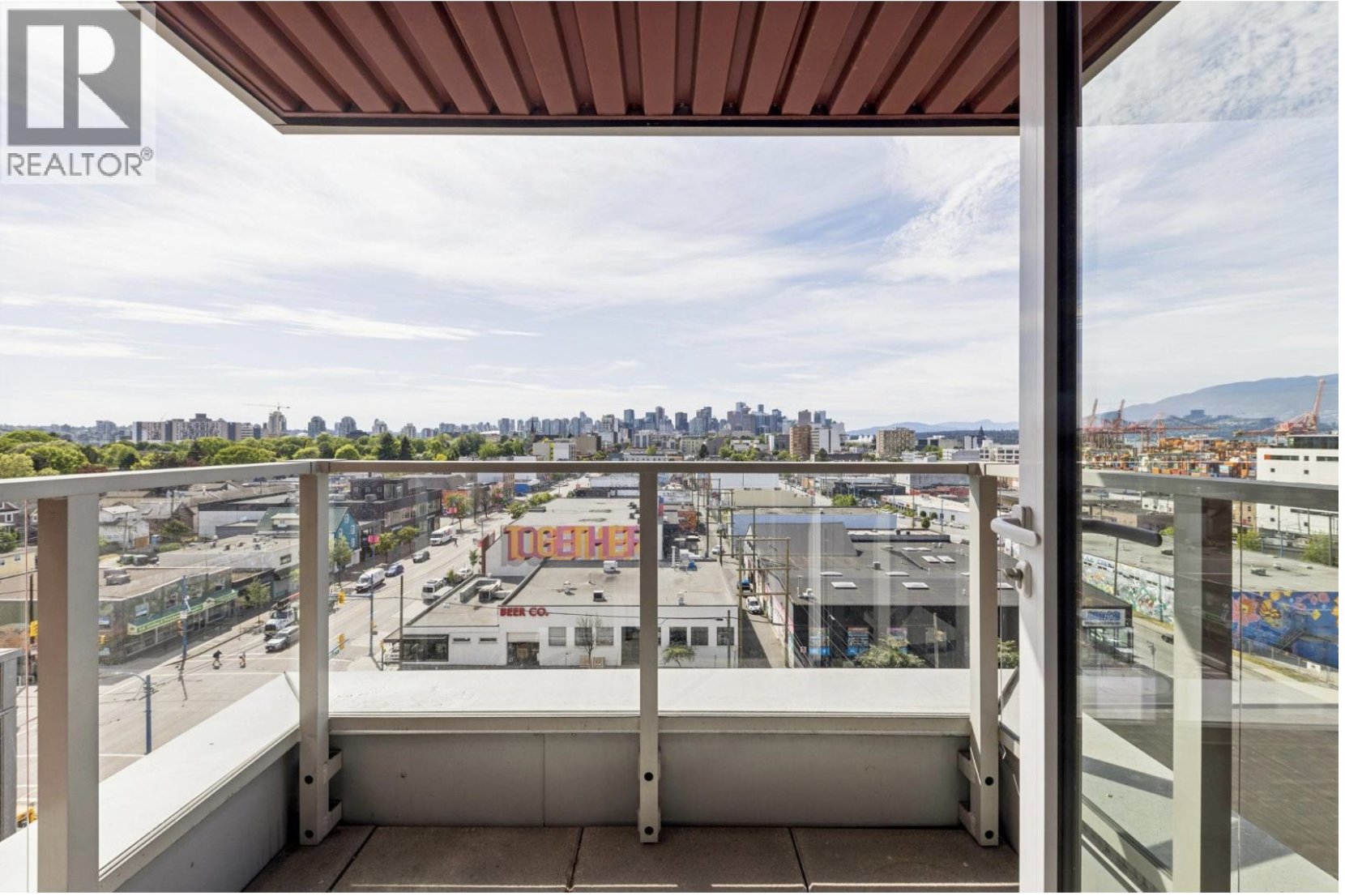
The unit occupies an unusually strategic position within the development. Located on the north-west corner of the building, it offers panoramic views across Vancouver while sitting minutes from Gastown, Chinatown, Rogers Arena, BC Place, the Port of Vancouver, Hogan's Alley, and the city's expanding arts, tourism, and innovation districts.
Combined with the building's legally compliant principal-residence short-term rental framework, these characteristics created an asset capable of supporting substantially more than conventional residential use.
By that point, I had moved eight times in four years while rebuilding my life following severe cross-border intimate partner violence, which resulted in permanent disabilities.
Like many Canadians pursuing homeownership, I viewed the opportunity as more than a real estate transaction. It represented stability, the opportunity to build equity, and the foundation from which to build a business.
Those objectives quickly became inseparable.
Over the following two years, I developed the operating model attached as s.t.u.d.i.o.86 – Concept Overview & Growth Plan.
Initially described as a "Destination Airbnb," the concept evolved into what I now describe as a Strathcona Village Arts & Culture Residency—a principal residence intentionally designed to integrate tourism, entrepreneurship, arts and culture, education, and community programming within a single operating model.
The objective was to transform one housing asset into a diversified platform capable of generating returns across tourism, arts and culture, entrepreneurship, neighbourhood partnerships, local procurement, and community programming.
Although initially conceived around one condominium, the concept ultimately informed the development of s.t.u.d.i.o.86, This Woman's Truth, and Eden Technologies, demonstrating how one housing asset became the catalyst for multiple entrepreneurial and public-interest initiatives.
Ultimately, financing fell through as lending conditions tightened amid changing market conditions and evolving short-term rental regulations.
The transaction did not proceed.
Yet the broader policy question remained.
A Financing Gap
Current financing systems continue to distinguish primarily between residential and commercial property.
Traditional lending frameworks generally distinguish between residential and commercial uses. Principal residences intentionally designed to integrate lawful residential and entrepreneurial functions may therefore struggle to fit existing financing models despite their potential to generate measurable public value.
As a result, productive housing models may encounter barriers to financing even when they align with broader government objectives relating to entrepreneurship, accessibility, tourism, cultural participation, and local economic development.
This gap suggests that current financing frameworks may not yet fully recognize emerging forms of productive principal-residence entrepreneurship.
The Cost of Unrealized Opportunity
When productive housing models fail to proceed, governments may lose opportunities extending well beyond housing itself.
Potential impacts include:
Reduced entrepreneurship
Diminished tourism activity
Fewer cultural initiatives
Lower local procurement
Reduced accessibility
Unrealized tax revenue
Diminished community programming
Lost economic participation
These opportunity costs are rarely measured because traditional housing evaluation remains focused primarily on market value.
A Proposed Public-Interest Evaluation Framework
Rather than proposing a new housing program, this paper proposes an evaluation methodology.
Governments already assess major public investments according to their capacity to generate value across multiple policy domains.
This paper asks whether a similar analytical framework might, in carefully defined exceptional circumstances, be applied to certain individual housing assets.
Possible evaluation criteria could include:
Eligibility
Principal-residence requirement
Demonstrated operating model
Economic Contribution
Measurable economic activity
Entrepreneurship
Tourism contribution
Local procurement
Social Contribution
Accessibility
Cultural participation
Community programming
Accountability
Measurable outcomes
Ongoing reporting
Periodic evaluation
Such a framework would remain exceptional rather than routine.
Although this paper focuses on one condominium, the underlying framework may have broader application wherever governments evaluate assets capable of generating public value across multiple policy domains.
Conclusion
The federal–provincial condominium partnership represents an important innovation in Canadian housing policy.
This submission supports that initiative while asking whether governments should preserve limited flexibility to recognize exceptional principal-residence operating models capable of generating broader public value.
Ultimately, this paper is not about one condominium.
Nor is it principally about housing.
It is about how governments recognize public value.
As policy challenges increasingly span multiple ministerial responsibilities, exceptional assets may likewise generate benefits that extend across housing, entrepreneurship, tourism, arts and culture, accessibility, economic development, community resilience, and fiscal sustainability.
The question is therefore not whether a property is new or resale, residential or commercial.
The question is whether governments have recognized all of the public value it is capable of creating.
Author's Note
This concept was developed while I was a long-term tenant of the condominium used as the case study. Since completing the underlying business concept, I have been evicted, and the unit has been listed for sale.
Although my personal circumstances prompted many of the questions explored in this submission, the paper is intended to advance a broader policy discussion about how governments evaluate public value rather than to seek a particular outcome in my own case.
Appendices
🏙️ Case study
s.t.u.d.i.o.86 || Property Listing
📄 Appendix A
s.t.u.d.i.o.86 || Concept Overview & Growth Plan
📄 Appendix B
s.t.u.d.i.o.86 || Expansion Concept — Unit 901
📄 Appendix C
Additional Off-Market Opportunity (2)
📄 Appendix D
Additional Off-Market Opportunity (3)
About the Author
Sarah Lynn Whyte is a Vancouver-based founder, writer, and public policy advocate whose work explores how entrepreneurship, systems thinking, and cross-sector collaboration can generate broader public value.
Following her experience as a survivor of near-fatal cross-border intimate partner violence, her work expanded beyond justice reform to examine the intersection of housing, accessibility, entrepreneurship, tourism, arts and culture, community development, and public policy. Rather than viewing these as separate disciplines, she explores how they can be coordinated to address complex public policy challenges.
Across each of these initiatives runs a common line of inquiry:
How can better-designed systems create better public outcomes?
Her work includes survivor-led policy proposals relating to access to justice, Canada's exercise of extraterritorial jurisdiction, housing, entrepreneurship, and inclusive economic participation. She is the founder of This Woman's Truth, a public policy and education initiative, and Eden Technologies (in development), a company exploring relationship infrastructure, systems innovation, and entrepreneurship.
Although these initiatives operate in different sectors, they are united by a common objective:
Identifying practical ways that thoughtful design, entrepreneurship, and public policy can generate measurable public value.
The Origins of s.t.u.d.i.o.86
This submission traces its origins to s.t.u.d.i.o.86, an entrepreneurial concept developed during the COVID-19 pandemic.
It emerged from the convergence of two circumstances.
A Vancouver dance instructor suddenly needing to reinvent her career.
A Vancouver developer exploring opportunities to redeploy approximately $800,000 of capital tied to a condominium retained within his personal portfolio.
What began as a practical conversation about homeownership gradually evolved into a broader question:
Could one principal residence become more than a place to live?
Initially, the concept was imagined as a Hollywood-of-the-North destination residence featuring artist residencies, creative programming, and neighbourhood partnerships.
It soon became more than a business idea.
It gradually became an exploration of how one housing asset might simultaneously support entrepreneurship, tourism, arts and culture, education, community programming, and long-term recovery.
Although the original transaction never proceeded, the underlying questions remained.
Over time, they informed the development of s.t.u.d.i.o.86, This Woman's Truth, Eden Technologies, and ultimately the cross-ministerial policy framework presented in this paper.
Looking back, the condominium was never simply the destination.
It became the place where several seemingly unrelated ideas first converged.
Explore Related Work
The ideas explored in this submission continue in several related initiatives that examine public policy, entrepreneurship, systems innovation, and community development.
TwT || This Woman's Truth
Survivor-led public policy, education, and systems change.
s.t.u.d.i.o.86
Entrepreneurship, hospitality, creative placemaking, and productive principal residences.
Eden Technologies (in development)
Relationship infrastructure, systems innovation, and network intelligence.
Together, these initiatives explore different pathways through which thoughtful design, entrepreneurship, and public policy can generate measurable public value.
For policy discussions, collaboration, speaking engagements, or media inquiries…