12: New Year’s Day, 2015
[3-minute read]
The days that followed looked mostly ordinary on the outside, which made what was happening inside harder to name.
After waking up from the violence a few hours earlier, we rushed to shower, pack, grab breakfast on the run, and pay for the damage to the hotel room door.
Time resumed without asking if I was ready to move with it.
I moved when movement was required. I smiled when it seemed expected. I ate lightly if I was hungry. But something seismic had happened, and I hadn’t even yet seen the damage.
The nervous system doesn’t speak in logic or language. It speaks in chemistry and biology. In the hours, days, and weeks that followed, my hormones, neural pathways, and reflexes needed time to rest and recalibrate. Little did I know that non-fatal strangulation can result in death even days and weeks following the assault.
In the meantime, the tour bus was scheduled to leave bright and early, dropping us in Florence to wander the square.
The sun wasn’t high; most of it was in shadow. Just like us. We were both quiet.
I remember a violinist playing in the square. I asked my partner to dance with me, and he said he was too ashamed to give me that comfort.
Much of the morning passed in a fog.
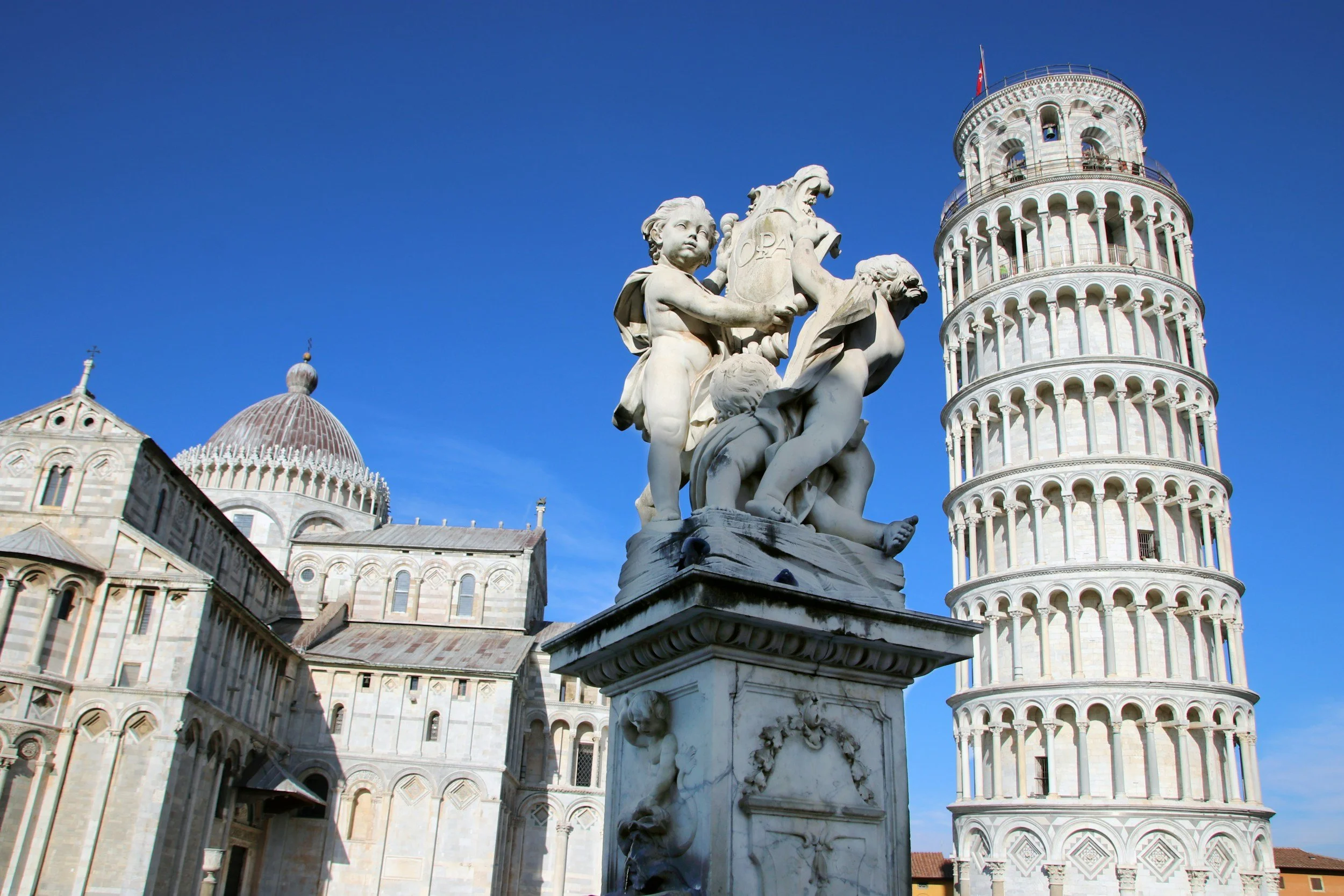
By the time we got to Pisa, it was late morning or early afternoon. Against an open blue sky, the lacy-white buildings were brilliant.
I pulled out my iPhone to take photos, but I was distracted when I found the recordings I’d made earlier that morning — another dark shadow in an otherwise picturesque scene.
With the phone to my ear, I walked around Pisa listening to an event that my mind had already tried to erase.
My esophagus crushed like a pop can.
The last sip of oxygen left in my lungs.
The vacancy in his eyes.
The expansive darkness on the other side of that final breath — an infinite cliff already crumbling beneath me.
It all flooded back. This time, it had an anchor.
Quickly re-imprinted inside my body and brain were psychological and physical memories I wouldn’t wish on my worst enemy. I’ve come to understand why strangulation is considered an act of torture.
Neurogenic shock — different from spinal shock — occurs when there’s been an injury to the spinal cord above the sixth thoracic vertebra, which disrupts the body’s ability to regulate itself. It affects roughly half of people with spinal cord injury within the first 24 hours and usually resolves within days, though autonomic dysfunction and traumatic shock responses can persist for weeks or longer.
In this state, access to the fight-or-flight response is compromised. With sympathetic mobilization disrupted, parasympathetic dominance emerges — slowing, conserving, and defaulting to ancient survival functions that operate without permission or meaning.
When the process of homeostasis is disrupted, choice and agency are profoundly constrained.
In other words, I was dissociating. The body stops choosing and starts compensating. All that exists is endurance.
The violence did not end the night it happened. It echoed through my nervous system, my breath, my muscles, my sleep, my skin, my voice, my sense of self.
I lived for years — and still do — with memory stored not as narrative but as sensation: a throat closing, a chest collapsing, the sense that if I finish that breath, something existential would follow.
It takes time and a sense of safety for a body to learn that the danger has passed.
Part of what makes the idea of Stockholm Syndrome so interesting is that the danger couldn’t be escaped.
It would take me years to learn to breathe again without fear. To trust that the next inhale would not be my last.
I was in shock for weeks.
Pisa was beautiful, though. Another blue-sky day.
Up next >> 13: Lake Como, Italy & Lucerne, Switzerland
© 2025 This Woman’s Truth. All rights reserved.
No reproduction, distribution, republication, automated scraping, data extraction, or use for AI training, model development, or derivative dataset creation without express written permission.
