03: The unplanned pregnancy
[2-minute read]
Content note: fertility challenges, pregnancy, pregnancy options, pregnancy loss
An experience we happened to share.
I knew there had been an unplanned pregnancy between him and his longtime, on-again, off-again first love before he moved out west at twenty-three.
Coincidentally, I’d had my own experience at twenty-four.
That shared knowing created a quiet tenderness. A kind of mutual respect for how formative and fragile relationships like that — and those moments — can be.
For me, the surprise carried extra weight. At seventeen, I’d been diagnosed with PCOS — a hormonal condition affecting roughly 4–20% (depending on the research) of women, and one that can complicate fertility. By my early twenties, I had already spent years adapting to the idea that motherhood might not come easily, or at all.
So when I found myself pregnant at twenty-four — with a twenty-five-year-old Kiwi I’d only known for four or five months, whose work visa was expiring and who would soon return to New Zealand — the emotional terrain was complex, but the path still clear.
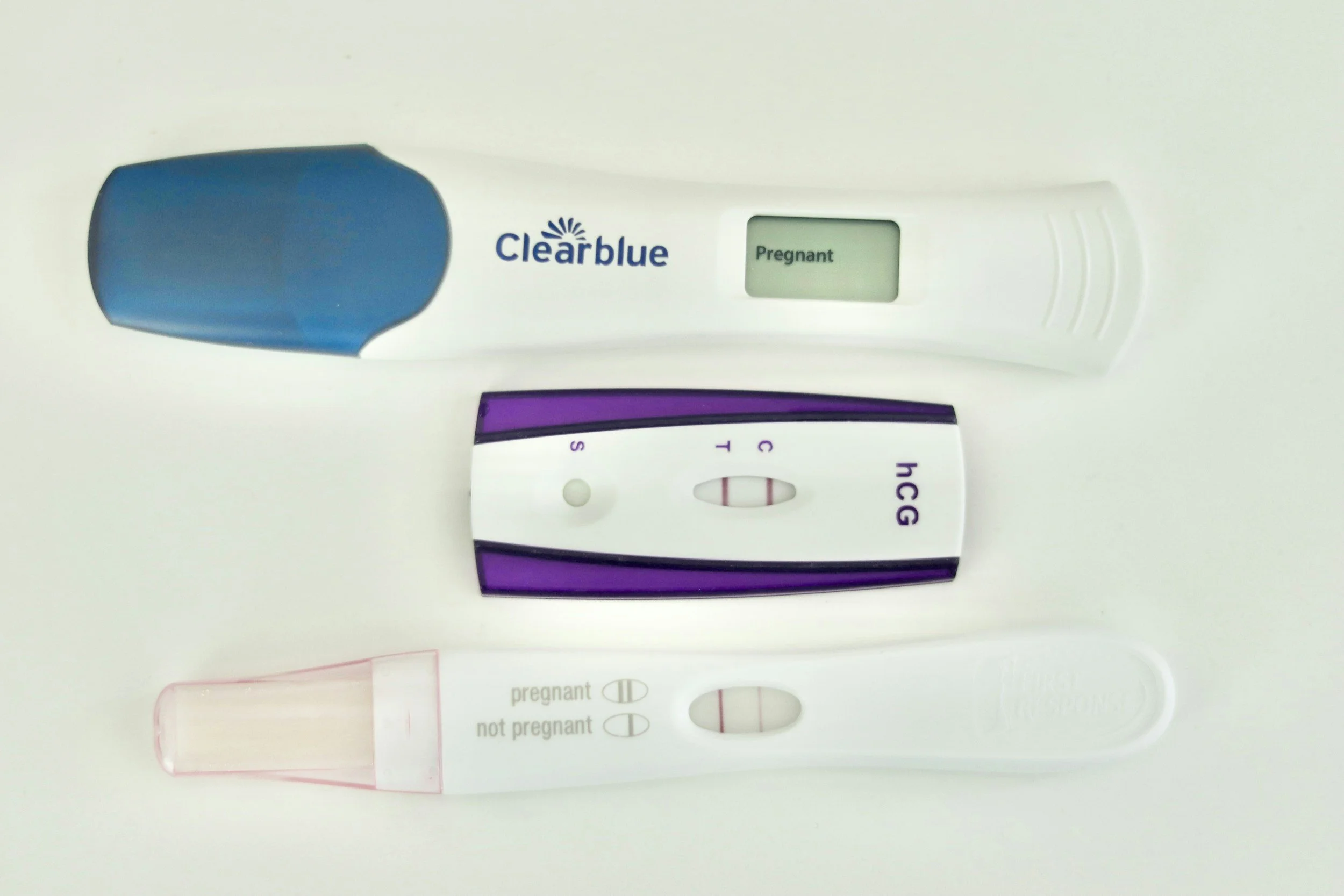
I remember the day I found out vividly. I was driving to work when something in my body insisted I pull off the highway and into a pharmacy. Late periods weren’t unusual for me; PCOS and irregular cycles went hand in hand. But this time felt different. My intuition was loud.
Two moments had been following me like shadows all week:
I’d met a woman at a party who confided she was late and planning to take a pregnancy test.
Before that, I’d been in Chapters-Indigo, repeatedly drawn to a book that didn’t interest me at all.
It turned out to be the cover art—something gestational, two peas in a pod—that kept catching my eye.
And then there was what he’d told me:
“If I ever got a woman pregnant and she didn’t want to raise it, I’d hope she’d give me the option.”
Oof. That’s a lot to sit with. If it takes two people to make one, should it also take two people to decide what happens next?
The pregnancy ended in miscarriage, which in many ways was probably for the best. When I finally told him, he looked inward and said, “I said that to you, but I don’t think I knew what I was talking about.”
Strangely, that felt validating.
Months after he’d gone home, I found myself crying one evening without understanding why. The feeling surfaced fully formed, without context. My sister stopped by, asked what was wrong; I couldn’t answer. She invited me to join her and our mom for sushi, and I accepted.
On my way out, I noticed the calendar by the door and stopped.
Nine months had passed.
Forty weeks, give or take.
Some timelines live beneath language. The body remembers even when the mind has moved on. That’s where the tears were coming from. Energy alchemizing.
At dinner, my sister announced she was pregnant. It gave me goosebumps then, and it still does.
Fifteen years later, in my late thirties, a very successful man told me he was at a stage and phase in his life where he’d be okay with a “whoops.”
A month or two later, when I reached out to talk, he didn’t want to.
Life has a way of circling certain themes back around — sometimes gently, sometimes with irony.
Women learn to read subtext early.
Bodies remember.
Timing matters.
And what’s said in passing can land in places deeper than intended.
Up next >> Chapter 04: The long-distance open… (Pt. 1)
© 2025 This Woman’s Truth. All rights reserved.
No reproduction, distribution, republication, automated scraping, data extraction, or use for AI training, model development, or derivative dataset creation without express written permission.
